

# RRB ALP CBT-2 Score Analysis: Part A, Part B and Merit
हिंदी संस्करण
RRB ALP CBT-2 में Part A, Part B और Final Merit को कैसे समझें?
---
Part A और Part B को एक जैसा क्यों नहीं माना जाना चाहिए?
यदि संबंधित Official Notification में यह निर्धारित है कि:
- Part A merit के लिए उपयोग किया जाता है, और
- Part B qualifying nature का है,
तो दोनों Parts के marks को एक ही total में जोड़कर Final Merit Score बनाना सही नहीं होगा।
इस स्थिति में Part B में प्राप्त marks उम्मीदवार को आवश्यक qualifying condition पूरी करने में मदद कर सकते हैं, लेकिन वे Final Merit Score को बढ़ाने के लिए Part A में जोड़ने योग्य marks नहीं होते।
एक सरल उदाहरण
मान लीजिए किसी candidate के:
Part A Score = 72 Marks Part B Score = 58 Marks
Final Merit Score = Part A के applicable marks
Part B = Qualifying Status / Qualifying Marks
Part A और Part B को जोड़कर 130 Marks का Merit Score दिखाना भ्रामक होगा।
---
# Final Merit तय करने से पहले Official Rule देखें
सबसे महत्वपूर्ण कदम है संबंधित Official Recruitment Notification या examination rules को पढ़ना।
हर परीक्षा में sections का treatment एक जैसा नहीं होता। इसलिए किसी calculator, score checker या third-party analysis में केवल question count देखकर यह मान लेना सही नहीं है कि सभी sections के marks final merit में शामिल होंगे।
Candidate को यह स्पष्ट होना चाहिए:
क्या यह Part Merit का हिस्सा है? या क्या यह केवल Qualifying Requirement है?
यही जानकारी आगे के पूरे score analysis को प्रभावित करती है।
---
# Score Card में Section-wise Analysis क्यों होना चाहिए?
एक professional score card केवल final number दिखाने के बजाय candidate को यह भी बताना चाहिए कि score कैसे बना।
इस तरह candidate को यह समझने में आसानी होती है कि उसके marks किस section से आए और कौन-सा section Final Merit में वास्तव में योगदान कर रहा है।
---
---
# Raw Rank और Final Merit Rank एक ही चीज नहीं हैं
यदि कोई platform candidates द्वारा voluntarily submitted scores का उपयोग करके rank calculation करता है, तो वह rank submitted-data rank या sample-based rank हो सकती है।
इसे automatically official merit rank नहीं माना जाना चाहिए।
उदाहरण के लिए:
Submitted-data Rank = 1,250
- सभी candidates का complete data,
- applicable category,
- vacancy distribution,
- post allocation,
- qualifying conditions,
- official normalization,
- tie-breaking rules,
न्य recruitment-specific rules
शामिल हो सकते हैं।
---
तीनों terms को एक जैसा समझना सही नहीं है।
Raw Score
Candidate के responses और applicable marking scheme के आधार पर calculated score।
Qualifying Score
Merit Score
किसी section का score qualifying हो सकता है, लेकिन वही score Final Merit में add न किया जाए—यह examination rules पर निर्भर करता है।
---
# Vacancy Data क्यों महत्वपूर्ण है?
Merit analysis केवल marks से complete नहीं होता।
यदि Final Merit या selection vacancy-based है, तो analysis के लिए vacancy information भी आवश्यक हो सकती है।
- Category-wise vacancies
- Zone-wise vacancies
- Post-wise vacancies
- Railway/unit-wise vacancies
न्य applicable vacancy classifications
इसलिए calculator को केवल एक total vacancy number लेकर Final Merit Projection नहीं बनाना चाहिए, जब तक यह स्पष्ट न हो कि वही vacancy figure candidate के relevant selection group पर लागू होती है।
---
कई बार system के पास score calculation के लिए पर्याप्त information होती है, लेकिन Final Merit Projection के लिए नहीं।
उदाहरण के लिए:
Candidate Score उपलब्ध है लेकिन Relevant vacancy data उपलब्ध नहीं है
या:
कुछ candidates के scores उपलब्ध हैं लेकिन Sample size बहुत छोटा है
ऐसी स्थिति में एक precise-looking merit rank या cut-off दिखाना candidate को गलत confidence दे सकता है।
ऐसे मामलों में बेहतर message हो सकता है:
Final Merit Projection: Coming Soon
या
More Data Required for Reliable Merit Analysis
---
# Small Sample में Merit Projection की समस्या
यह submitted data useful हो सकता है, लेकिन यह complete candidate population नहीं है।
इसलिए system को ideally यह भी बताना चाहिए:
- Number of submitted candidates
- Data collection date
- Category coverage
- Zone coverage
- Vacancy source
- Whether rank is estimated or official
इस transparency से candidate समझ सकता है कि rank किस आधार पर तैयार की गई है।
---
# Score Analysis में सबसे महत्वपूर्ण Principle
1. Section-wise Score 2. Qualifying Status 3. Submitted-data / Estimated Rank 4. Official Merit Rules
इन चारों को एक ही number में मिलाने से interpretation गलत हो सकती है।
---
Score Card खोलने के बाद केवल Final Score देखकर निर्णय न लें। यह भी जांचें:
Part A
कितने correct, wrong और unattempted questions हैं और प्राप्त marks कितने हैं?
Part B
क्या यह merit में शामिल है या केवल qualifying requirement है?
Rank
क्या यह official rank है या submitted-data/sample-based rank?
Vacancy
क्या relevant vacancy data उपलब्ध है?
Merit
यह basic checklist score interpretation को काफी स्पष्ट कर सकती है।
---
# एक व्यवस्थित Score Analysis का उदाहरण
मान लीजिए candidate के result में:
ऐसी स्थिति में platform को यह नहीं दिखाना चाहिए:
Final Merit Score = 140 Marks
और न ही बिना पर्याप्त data के कोई निश्चित Final Merit Rank देना उचित होगा।
इसके बजाय:
Part A Score: 78 Part B: Qualified Submitted-data Rank: 1,480 Final Merit Projection: Coming Soon
जैसा presentation ज्यादा स्पष्ट और responsible होगा।
---
# निष्कर्ष
RRB ALP CBT-2 जैसे multi-part examination में सही Score Analysis का सबसे महत्वपूर्ण हिस्सा केवल marks calculate करना नहीं, बल्कि हर Part की भूमिका को सही तरीके से समझना है।
---
# English Version
# RRB ALP CBT-2 Score Analysis: Part A, Part B and Merit
RRB ALP CBT-2-style examinations can be confusing because the paper may contain more than one part, and each part may have a different role in the recruitment process. One of the most common mistakes is to add the marks from every section and treat the combined total as the final merit score, even when the applicable recruitment rules specify that one section is only qualifying.
The first step in any reliable score analysis is therefore to identify which part contributes to merit and which part is used only to determine qualification.
---
Why Part A and Part B Should Not Automatically Be Added Together
When an examination contains multiple parts, those parts do not necessarily carry the same purpose.
For example, if the applicable rules specify that:
- Part A contributes to merit, while
- Part B is qualifying in nature,
then the marks from Part B should not simply be added to Part A to create a higher final merit score.
Part B may be essential for meeting the required qualification condition, but qualifying marks should remain separate from the merit score unless the official rules specifically state otherwise.
Simple Example
Suppose a candidate receives:
Part A Score = 72 Marks Part B Score = 58 Marks
If Part B is qualifying only under the applicable rules, the score should be presented as:
Merit Score = Applicable Part A Score
and separately:
Part B = Qualifying Status / Qualifying Marks
Displaying a combined 130-mark merit score in such a case would give the candidate a misleading picture of the merit calculation.
---
# Always Check the Official Recruitment Rule
The most important step is to verify the relevant official recruitment notification and examination rules.
Different examinations can treat their sections differently. A third-party calculator should therefore not assume that every section contributes to merit simply because all sections carry marks.
Before interpreting the result, the candidate should ask:
Does this Part contribute to merit?
or
Is this Part only a qualifying requirement?
That distinction should control the way the score is presented.
---
# Why Section-wise Score Analysis Matters
A professional score card should not only show one final number. It should explain how that number was calculated.
Ideally, the result should display separate information for each section.
| Detail | Part A | Part B | | ------------------ | ----------------------: | -------------------------: | | Total Questions | Separate | Separate | | Correct Answers | Separate | Separate | | Wrong Answers | Separate | Separate | | Unattempted | Separate | Separate | | Marks Obtained | Separate | Separate | | Merit Contribution | As per applicable rules | Qualifying / as applicable |
This makes it much easier for candidates to understand their performance and the role played by each section.
---
# Why Correct, Wrong and Unattempted Answers Should Be Shown
A single score does not explain how the candidate reached that result.
A useful score analysis should show:
Correct Answers → Number of correct attempts Wrong Answers → Number of incorrect attempts Unattempted → Number of questions left unanswered Raw Score → Score calculated according to the applicable marking scheme
This breakdown is especially useful when negative marking applies because candidates can see how incorrect attempts affected their score.
---
# Submitted-data Rank Is Not the Same as Official Merit Rank
Another important distinction is between a rank calculated from submitted candidate data and an official merit rank.
If a platform collects scores voluntarily from candidates and calculates a rank using those submissions, the resulting position should be described clearly as an estimated or submitted-data rank.
For example:
Submitted-data Rank = 1,250
This may indicate that the candidate is positioned at rank 1,250 within the available submitted dataset.
It does not automatically represent the candidate's official merit position.
The official recruitment process may use information such as:
- Complete candidate population
- Category
- Vacancy distribution
- Post allocation
- Qualifying conditions
- Normalization
- Tie-breaking rules
- Other recruitment-specific provisions
Therefore, submitted-data rank should be shown separately from any final merit projection.
---
# Raw Score, Qualifying Score and Merit Score Are Different
These three concepts should not be mixed.
Raw Score
The score calculated from the candidate's responses using the applicable marking scheme.
Qualifying Score
The score or performance condition that must be achieved to satisfy a qualifying requirement.
Merit Score
The score that contributes to the applicable merit or ranking process under the official recruitment rules.
A section can therefore have its own score and be essential for qualification without being added to the final merit score.
---
# Why Vacancy Data Matters for Merit Analysis
Marks alone do not always provide enough information for a meaningful merit projection.
Where selection is vacancy-based, the relevant vacancy structure may also matter.
Depending on the recruitment, vacancy data can be divided into:
- Category-wise vacancies
- Zone-wise vacancies
- Post-wise vacancies
- Railway or unit-wise vacancies
- Other applicable vacancy classifications
A calculator should not simply combine all vacancy figures into one total unless it is clear that the figure represents the candidate's actual selection group.
---
# When Should a System Show “Final Merit Coming Soon”?
Sometimes a platform has enough information to calculate the candidate's score but does not have enough information to produce a meaningful final merit projection.
For example:
Candidate score is available
but
Relevant vacancy data is not yet available.
Or:
Some candidate scores are available
but
The submitted sample is too small.
In such situations, displaying a precise-looking merit number may create a false sense of certainty.
A more transparent message would be:
Final Merit Projection: Coming Soon
or:
More Data Required for Reliable Merit Analysis
This clearly separates completed score calculation from an estimate that still requires more evidence.
---
# Why Sample Size Matters
Suppose hundreds of thousands of candidates took the examination, but only a few hundred or a few thousand candidates submitted their scores to an analysis platform.
That submitted information may still be useful, but it represents a sample rather than the complete candidate population.
A transparent score-analysis system should therefore consider showing:
- Number of submitted candidates
- Date of data collection
- Category coverage
- Zone coverage
- Vacancy source
- Whether the displayed rank is estimated or official
This allows candidates to understand the basis of the analysis instead of seeing a number without context.
---
# The Core Principle for Professional Score Analysis
A reliable RRB ALP CBT-2 score checker should keep at least four elements separate:
1. Section-wise Score 2. Qualifying Status 3. Submitted-data / Estimated Rank 4. Official Merit Rules
Combining these into one number can make the result difficult to interpret and may create unrealistic expectations.
---
# What Should Candidates Check on Their Score Card?
Candidates should not look only at the final score. They should also check:
Part A
How many answers were correct, wrong and unattempted, and what score was obtained?
Part B
Is this part included in merit, or is it only a qualifying requirement?
Rank
Is the displayed rank official, estimated, or based on voluntarily submitted data?
Vacancy
Is the relevant vacancy information available?
Merit
Has the merit projection been calculated using the applicable official rules?
This simple checklist can make score interpretation much more reliable.
---
# Example of a Transparent Score Analysis
Suppose a candidate's analysis shows:
Part A: 78 Marks Part B: 62 Marks Part B Status: Qualified Submitted-data Rank: 1,480 Relevant Vacancy Data: Not Yet Available
The platform should not display:
Final Merit Score = 140 Marks
Nor should it provide a fixed final merit rank without sufficient supporting data.
A more transparent presentation would be:
Part A Score: 78 Part B: Qualified Submitted-data Rank: 1,480 Final Merit Projection: Coming Soon
This clearly separates performance, qualification and estimated ranking.
---
# Final Takeaway
The most important part of analyzing an RRB ALP CBT-2-style examination is not simply adding marks; it is understanding what each part of the examination is designed to measure and how the official recruitment rules use those marks.
Where the applicable rules specify that Part A contributes to merit and Part B is qualifying, Part B should be reported separately rather than added to the merit score. The calculator should clearly display section-wise correct, wrong, unattempted and obtained marks while keeping the qualifying result distinct from the merit calculation.
The same principle applies to ranking. Raw score, qualifying status, submitted-data rank and final merit should never be presented as though they are the same thing. If relevant vacancy information is unavailable or the submitted candidate sample is too small, a professional system should clearly communicate that the final merit projection is not yet ready rather than presenting a precise number without adequate evidence.
This disciplined approach gives candidates a clearer picture of their performance and helps prevent confusion between raw marks, qualifying requirements, estimated rank and official merit rules. Ultimately, the official recruitment notification, authority-issued result and final merit process remain the authoritative basis for selection.
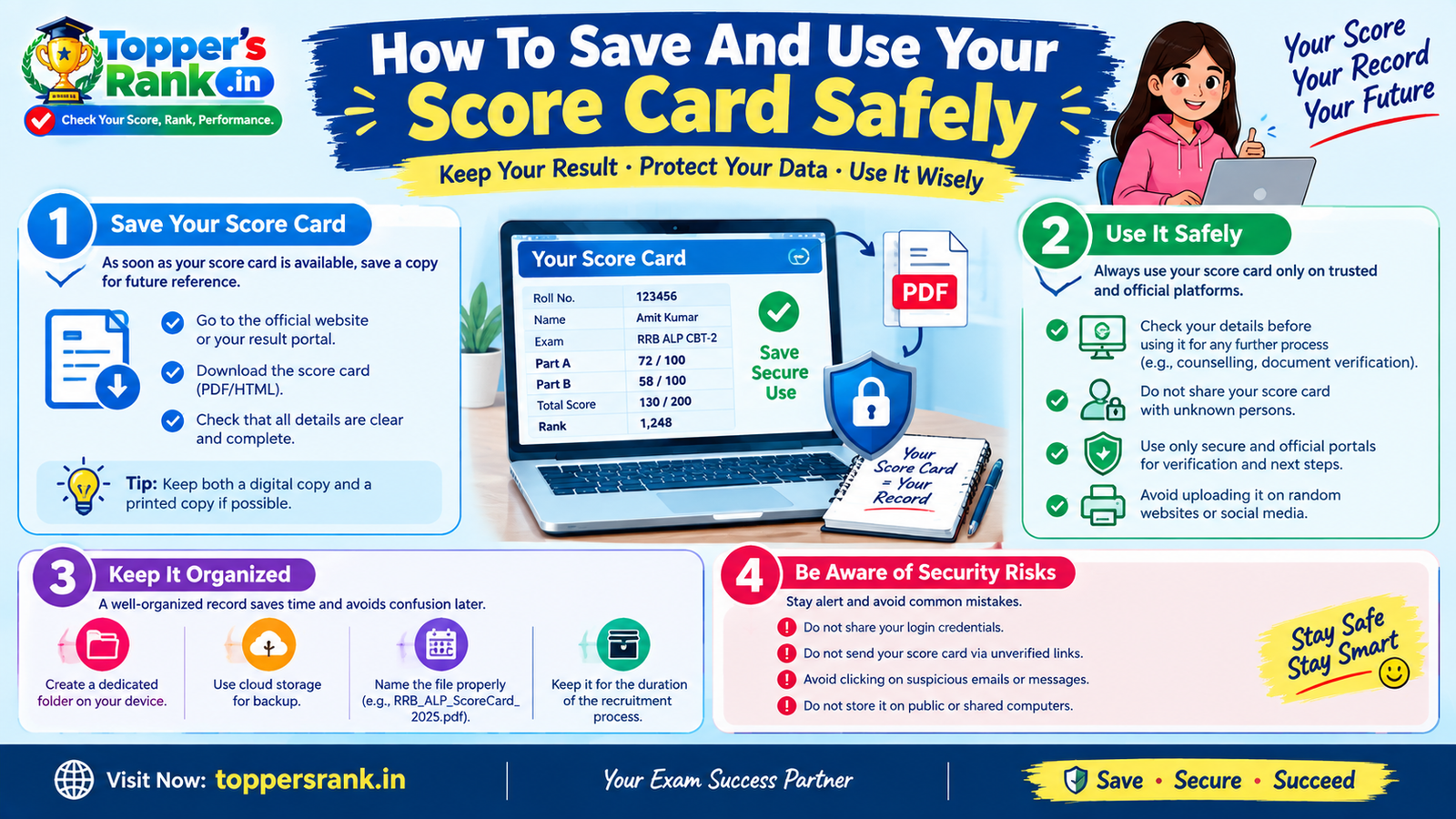 Exam Guidance · 16 minHow To Save And Use Your Score Card Safely
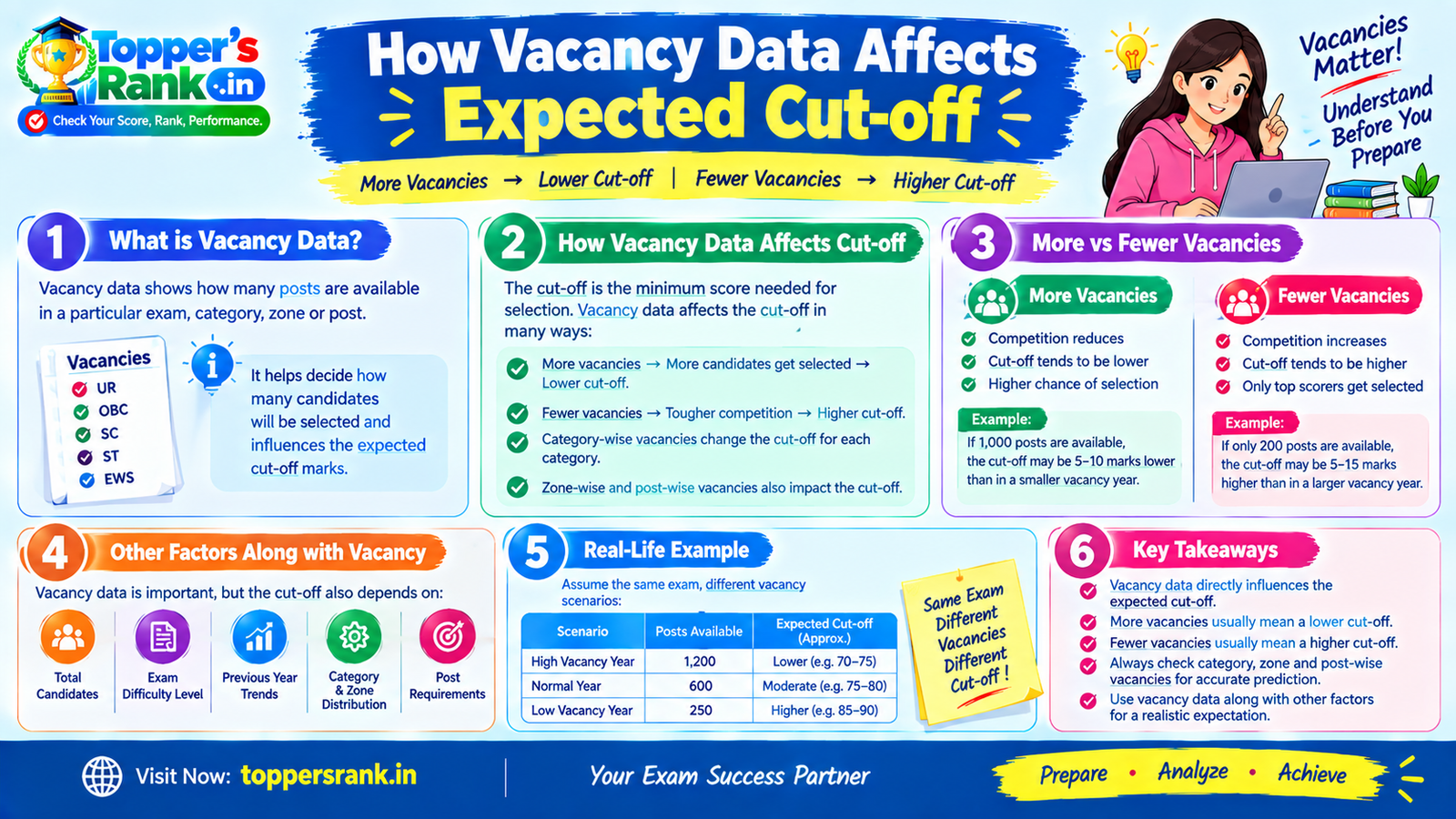 Exam Guidance · 10 minHow Vacancy Data Affects Expected Cut-off
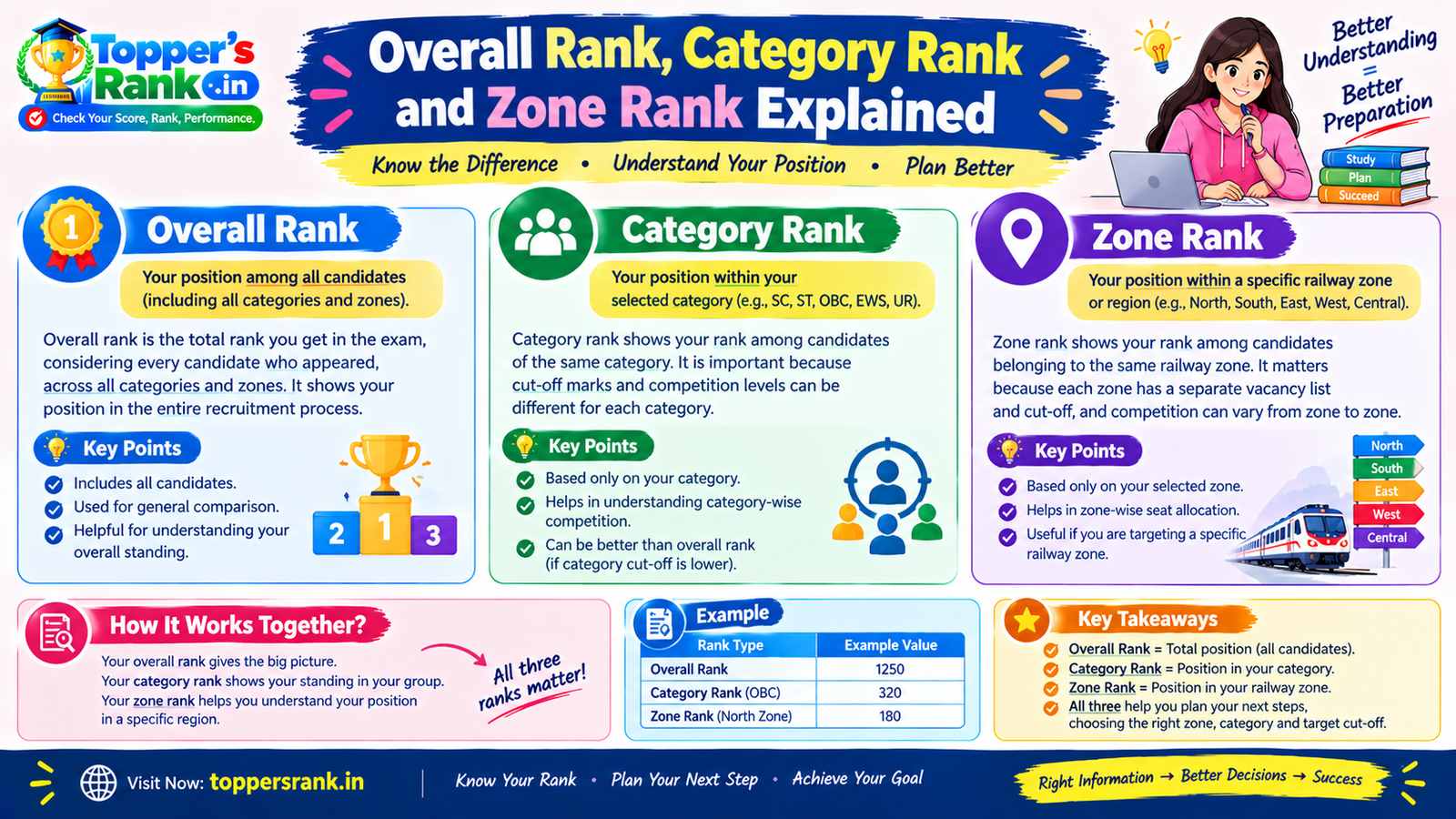 Exam Guidance · 9 minOverall Rank, Category Rank and Zone Rank Explained